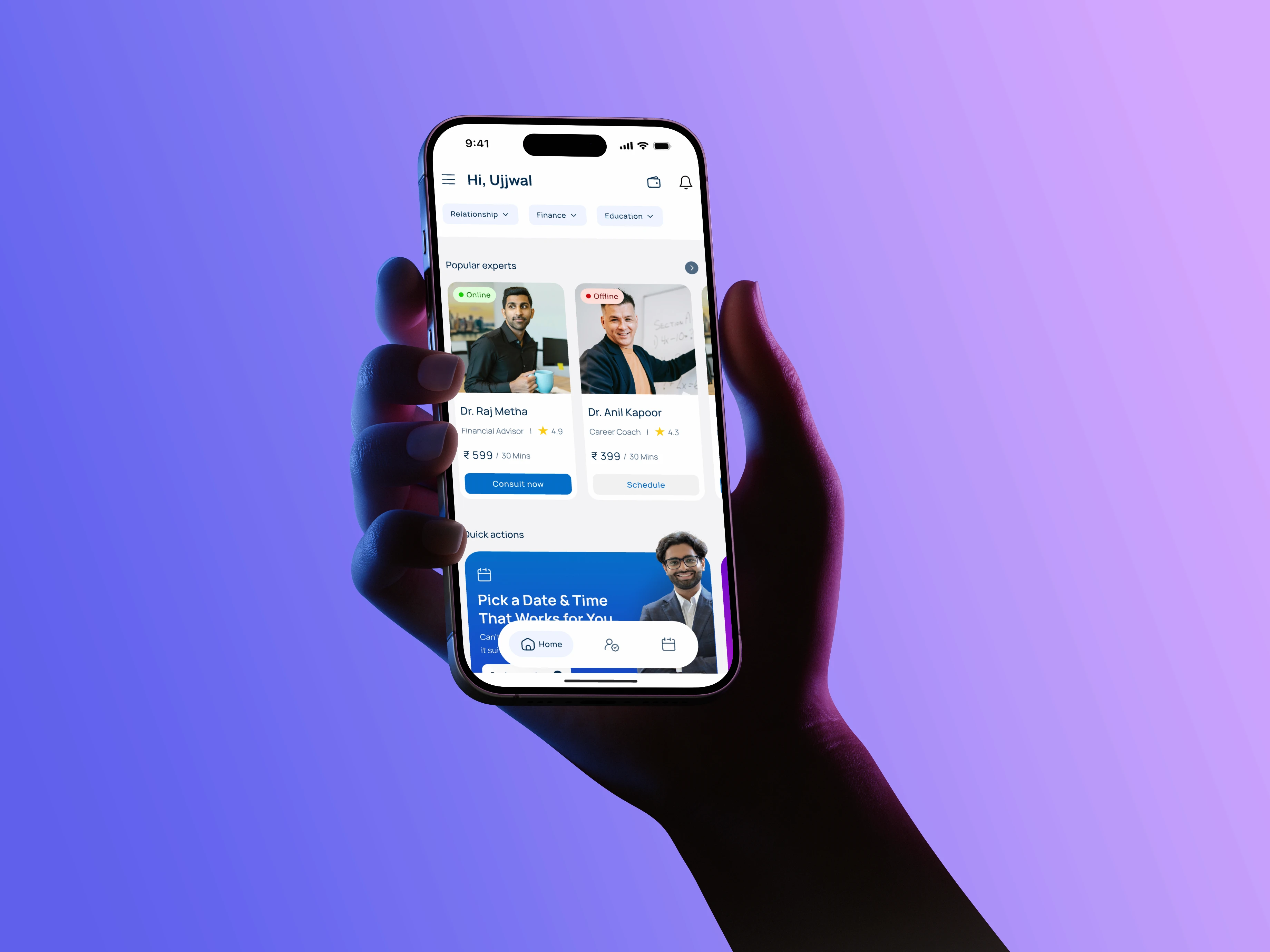
Methods Used:
User Research, Competitive Analysis, Information Architecture, Wireframing, Prototyping, Usability Testing
Tools:
Figma, FigJam, Notion, Google Forms, Miro
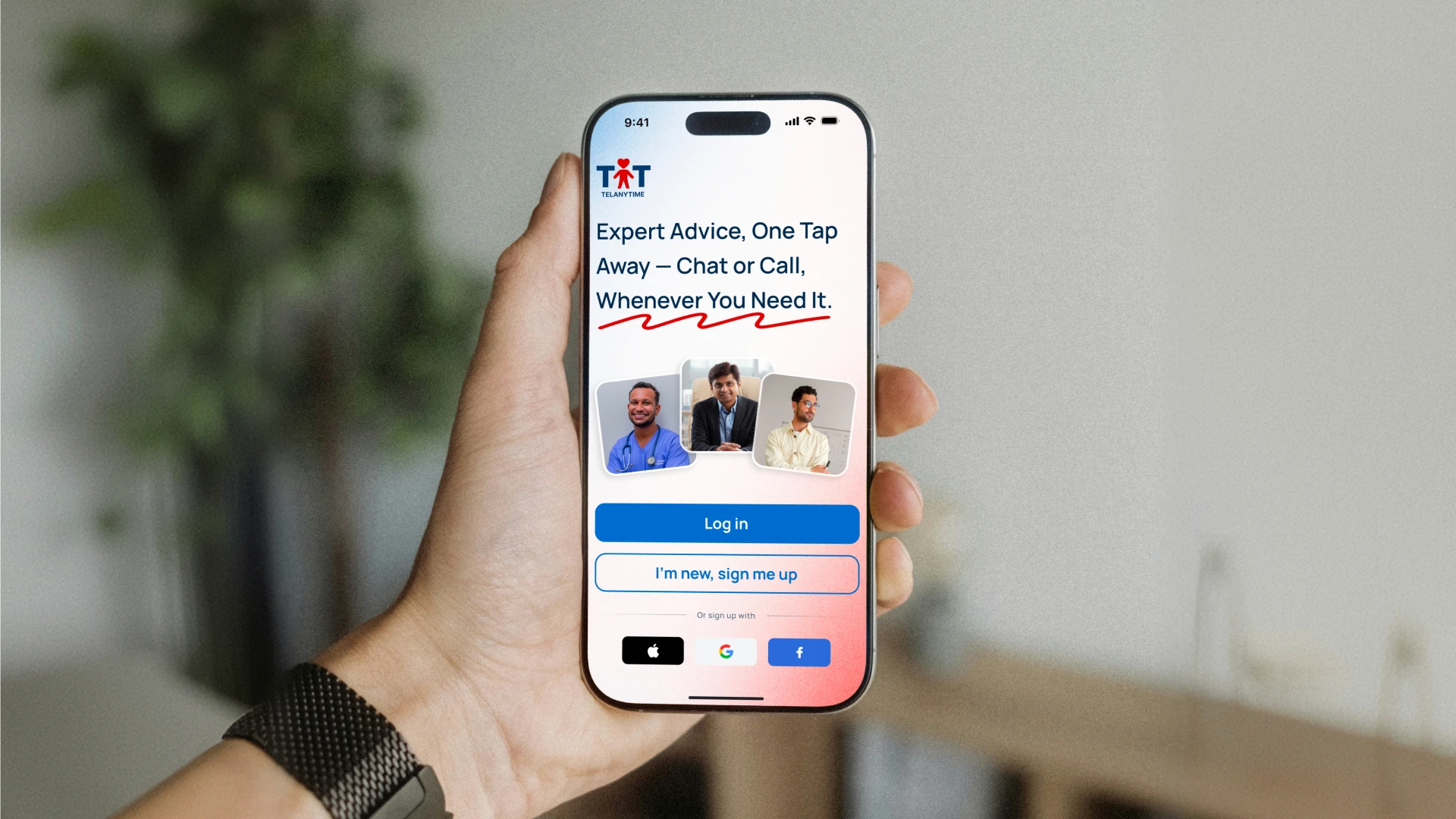
Tel Anytime helps adults in India get fast, stigma-free expert advice for sensitive issues (relationships, legal, finance, parenting, education).
Everything had to feel calm and trustworthy for users who were often stressed and short on time.
The Hypothesis
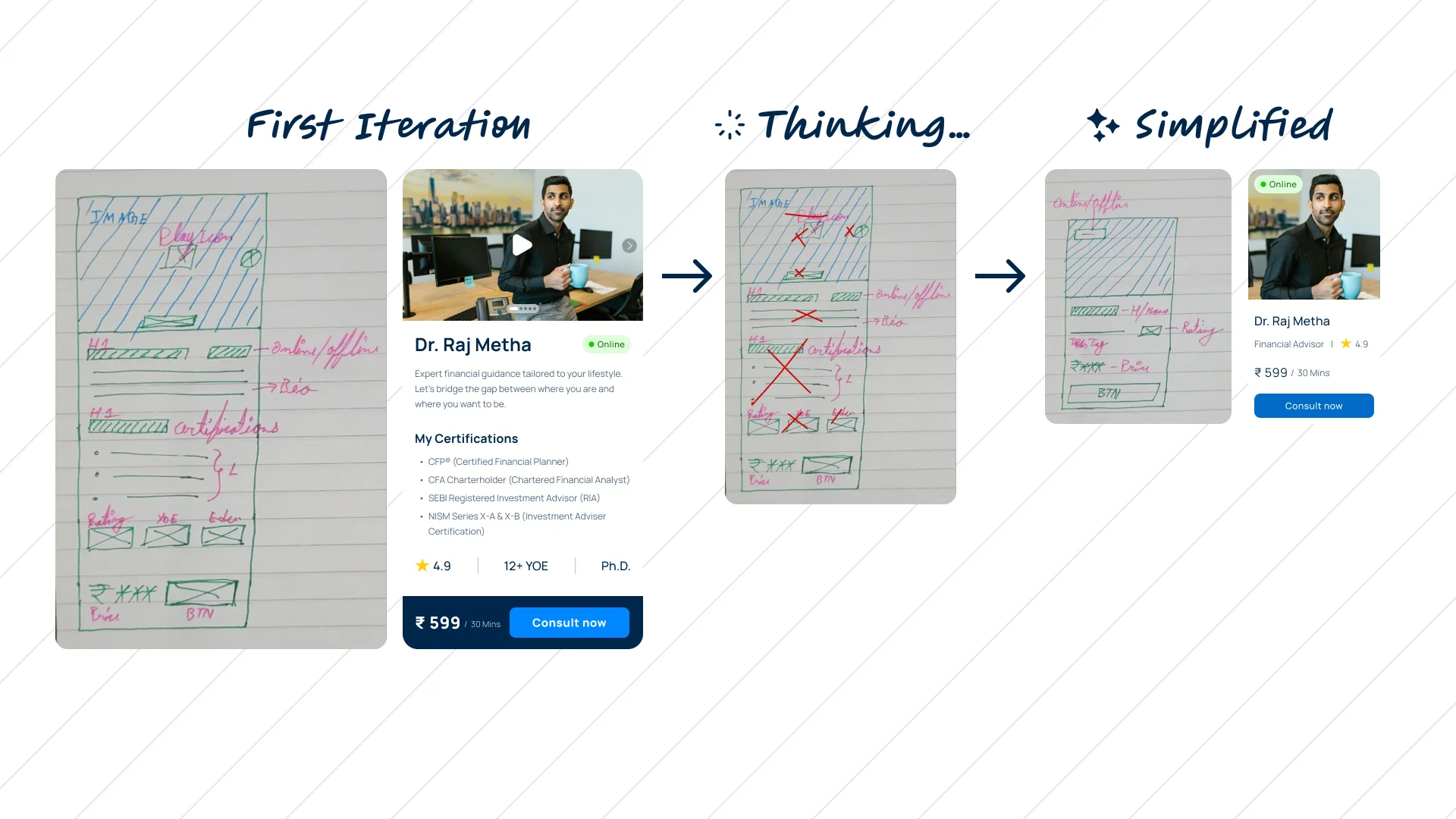
What I tried first
We thought more signals = more trust. Profiles showed long bios, full credential lists, certification images, optional video intros, and multiple micro-copy areas explaining approach and fees.
The idea: Give everything a user might need so they could decide confidently.
Why that felt right
It came from the belief that trust is built from evidence. If we showed credentials, case types, and background, people would feel safe to pay.
Now (the working hypothesis)
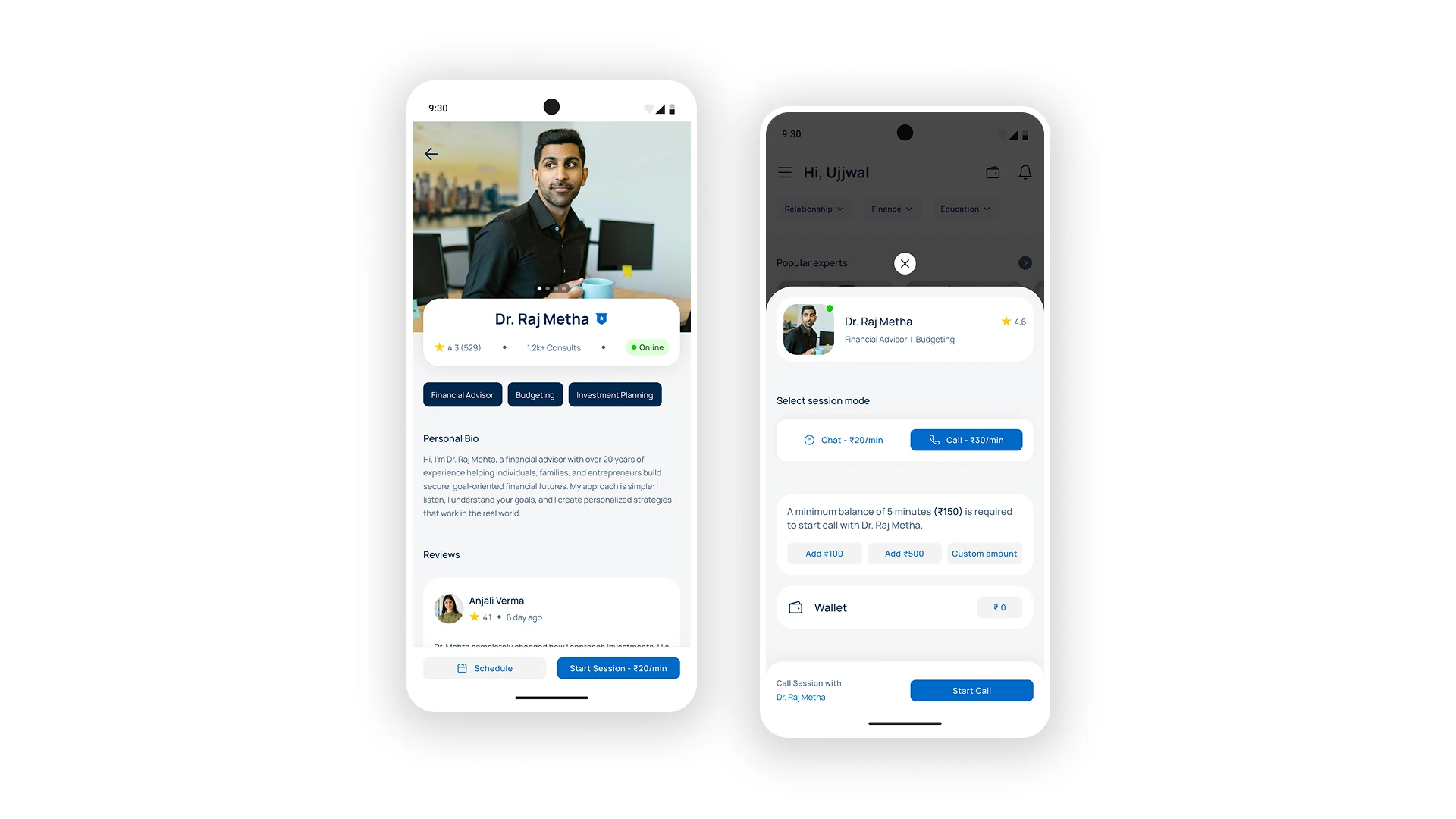
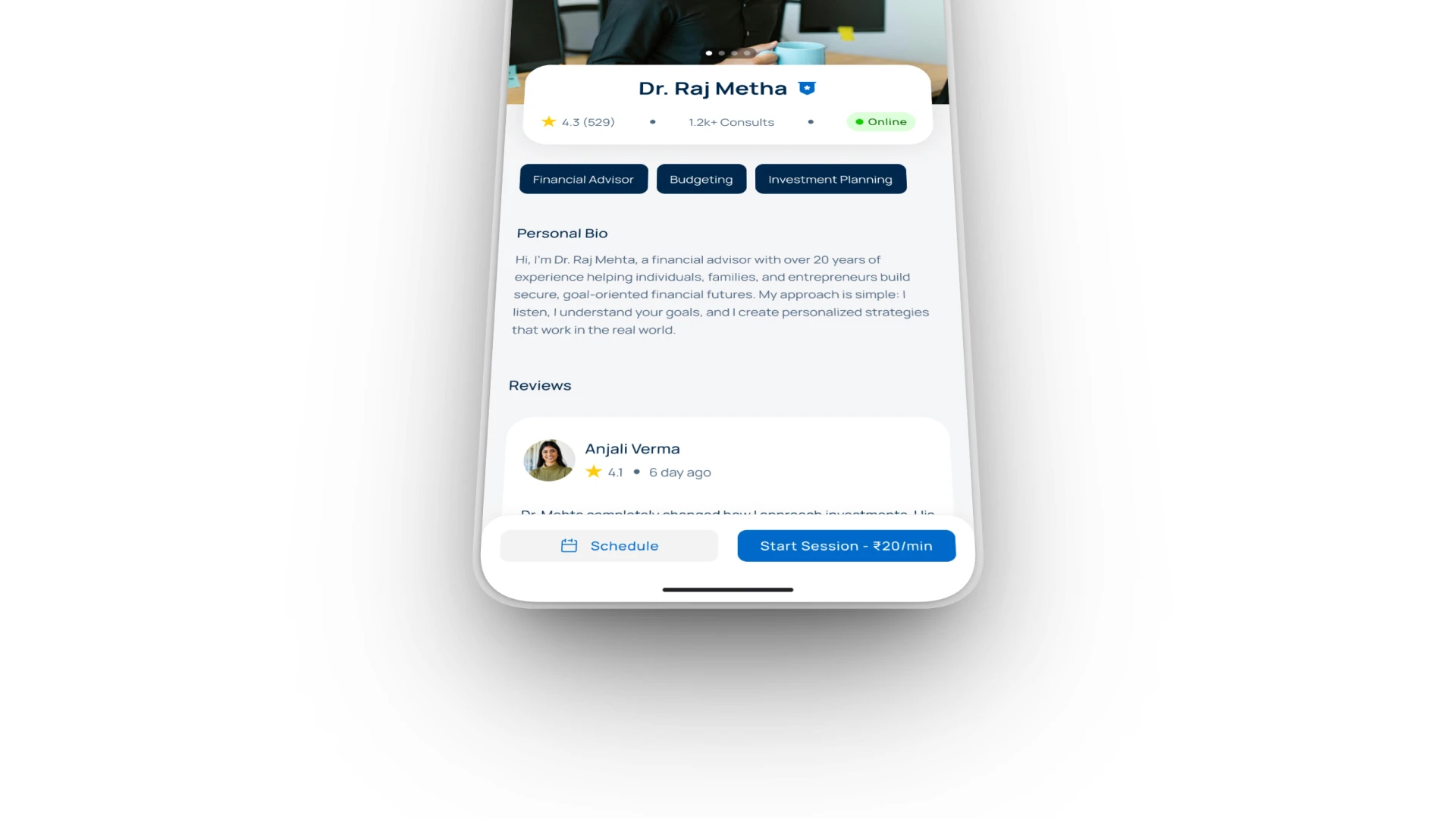
Simplify the signal set to the highest-impact pieces — rating, total consultations, online/offline badge, top 3 specialization tags, a short personal bio, and user reviews — and make starting a session feel immediate.
Why this change
Real users don’t scan credentials under stress. They need compact, situation-relevant signals that answer two quick questions: Is this person good? Can I talk to them now? We hypothesized that fewer, clearer signals plus a fast start flow would increase confidence and conversions.
The Conflict
Before (the problem showed up)
We initially believed that more information would create more trust. Expert profiles were dense — long bios, credentials, certifications, optional videos, and extended explanations. On paper, it looked thorough.
In reality, this violated Hick’s Law. Too many choices and too much information increased decision time exactly when users were emotionally stressed. Instead of feeling reassured, users paused, overthought, and dropped off.
What specifically broke
Users opened rich profiles, skimmed a few sections, then stalled. The effort required to evaluate experts felt high. This clashed with Cognitive Load Theory — people seeking help aren’t in a mental state to process complex data. The design assumed rational comparison; users were operating emotionally.
Expert onboarding also suffered. Heavy verification and profile requirements slowed supply, which weakened availability and indirectly hurt trust.
The pivot (what now works)
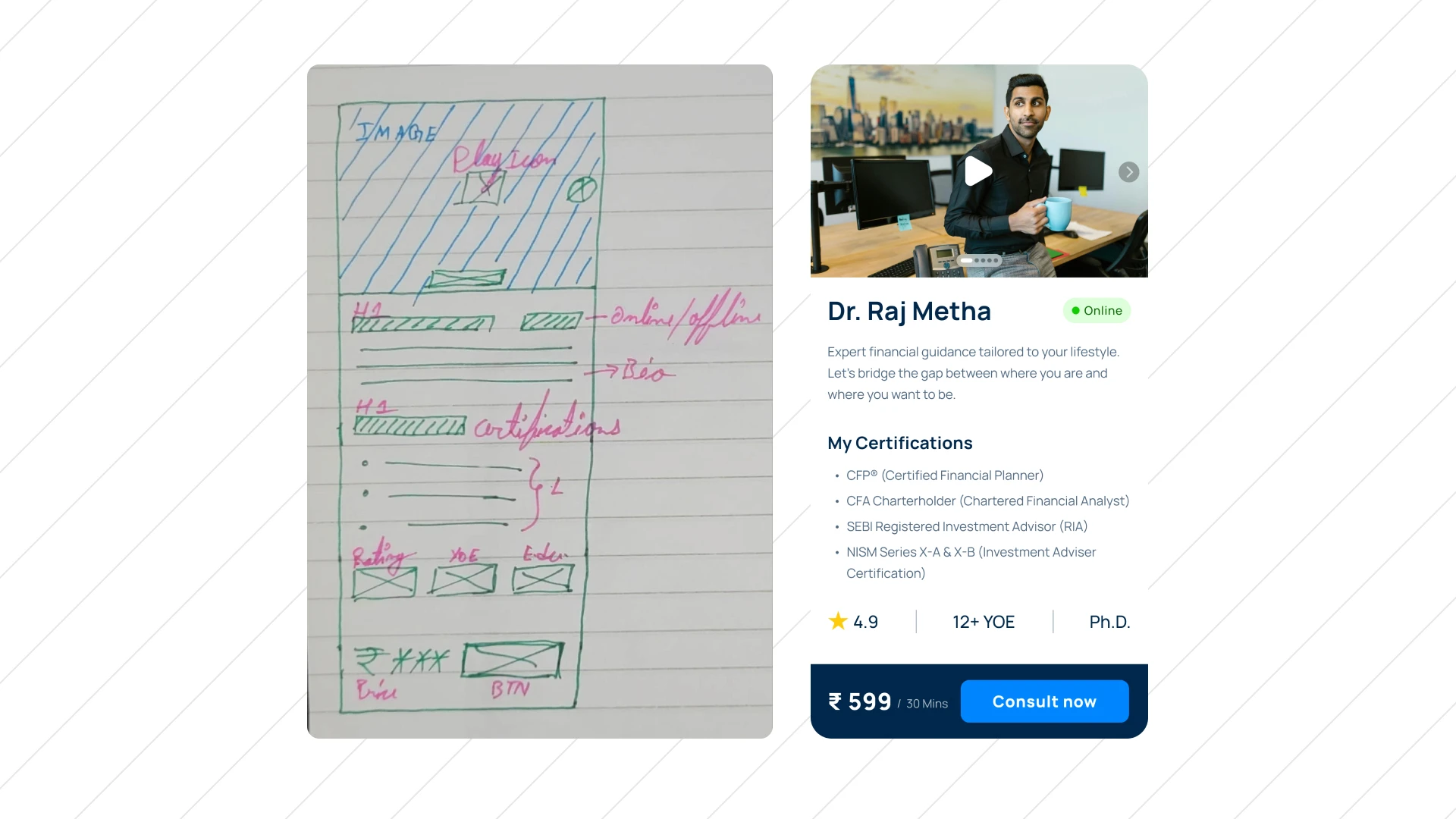
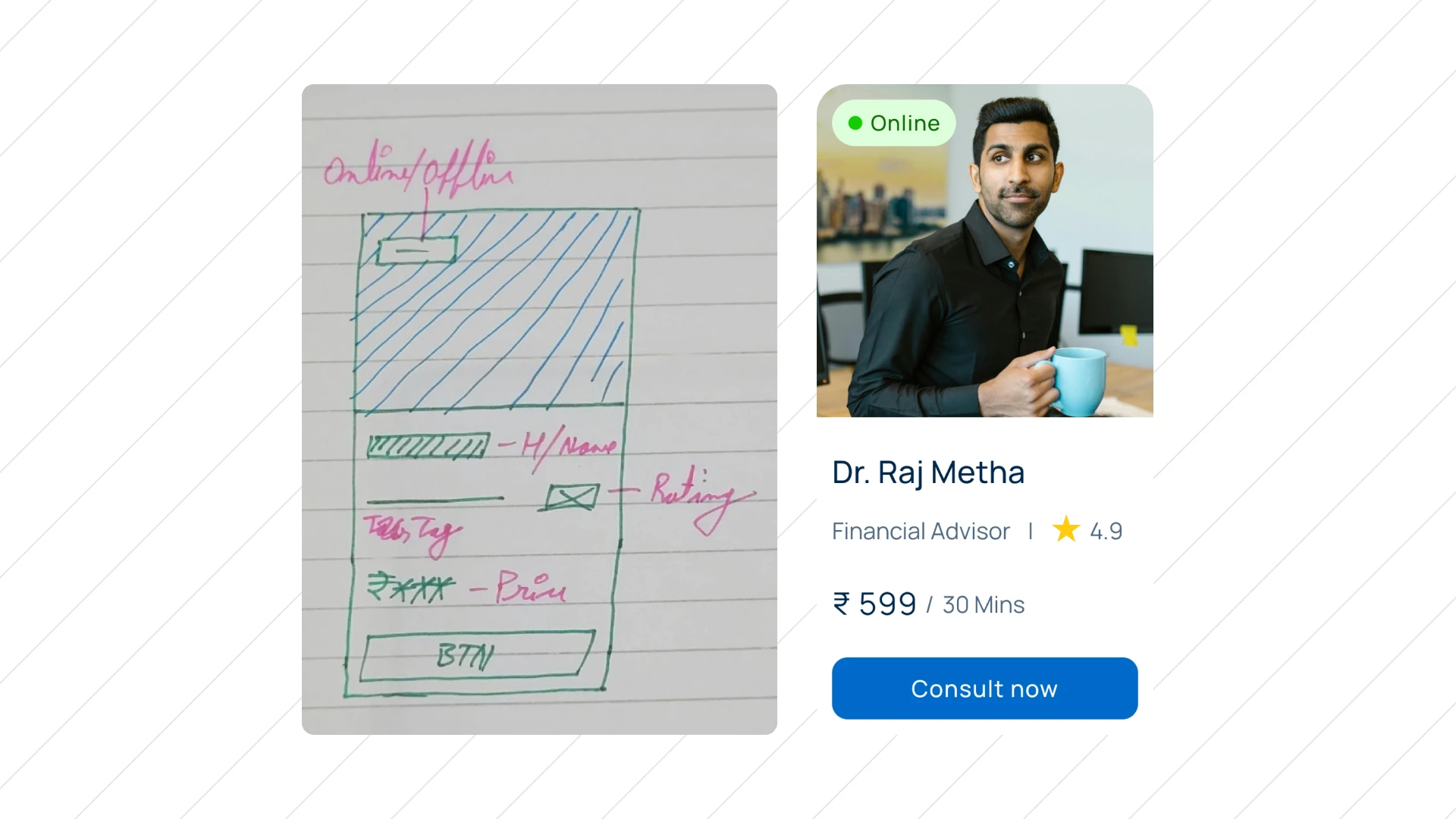
We reduced profiles to high-signal elements only:
rating + total consultations, online/offline badge, top 3 specialization tags, a short personal bio, and user reviews.
This structure follows Signal-to-Noise Ratio principles — removing low-impact information so meaningful signals stand out.
Why it works psychologically:
Ratings + consultation count leverage Social Proof — users trust what others have already validated.
Online/offline badge supports Immediate Feedback, reinforcing the “Anytime” promise.
Three specialization tags apply the Rule of Three, making information easier to scan and remember.
Short bio + reviews provide just enough narrative to satisfy emotional trust without overload.
Flow improvements
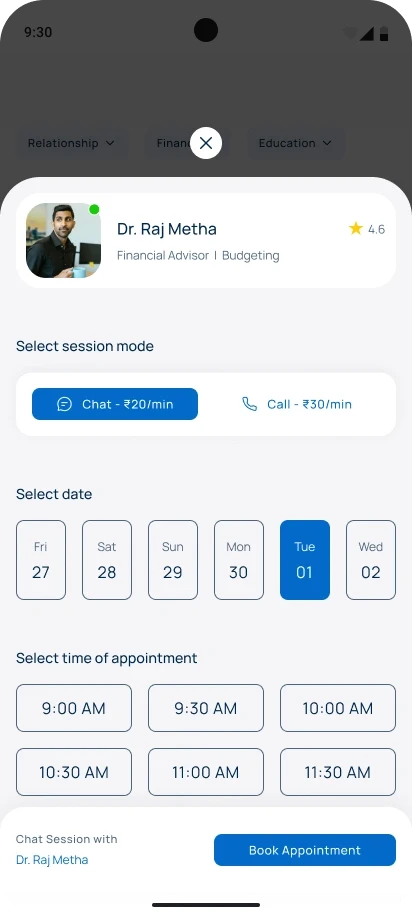
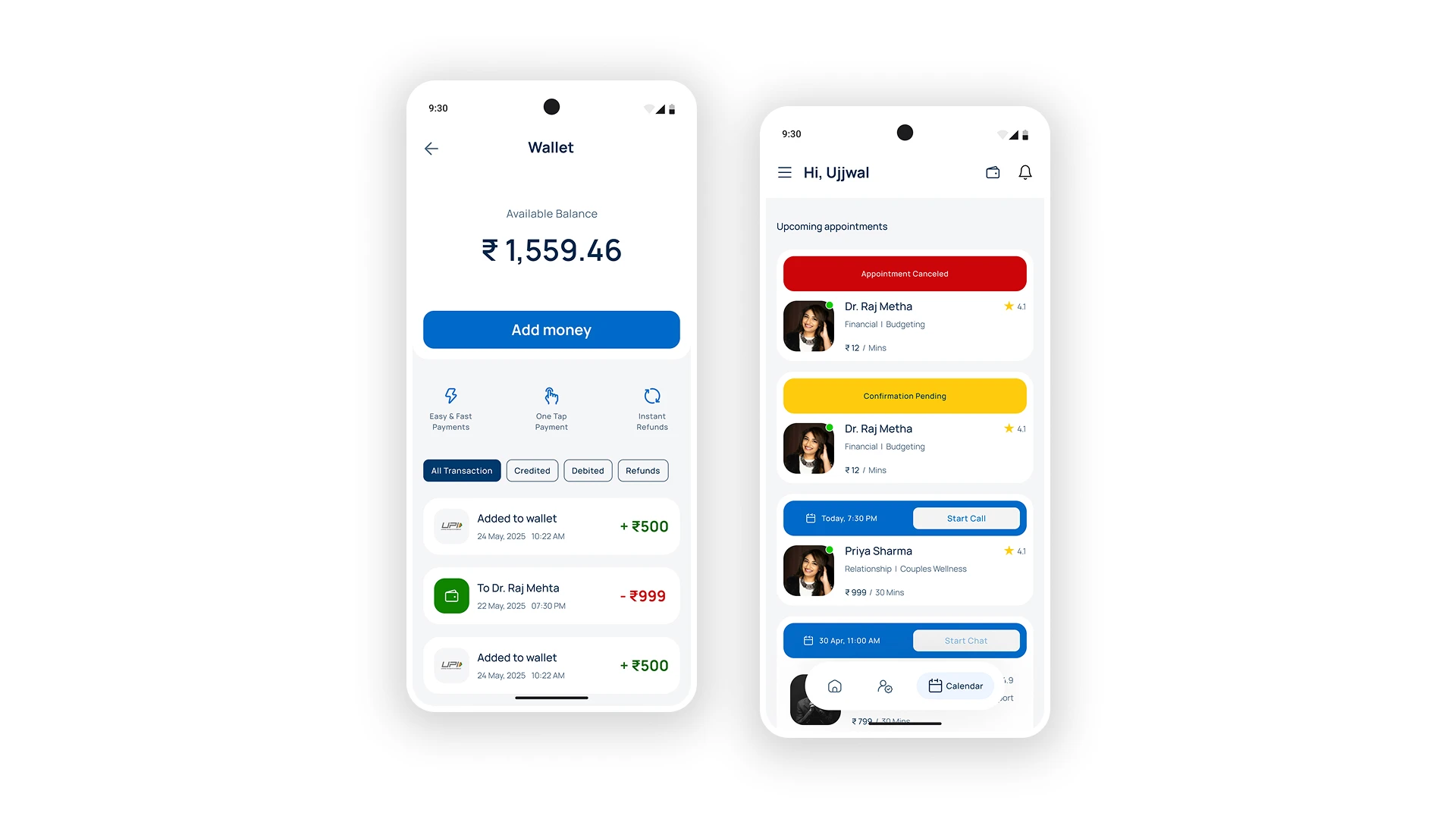
The booking journey became: select expert → Start Now / Schedule → confirm.
This reduced interaction cost, aligning with Fitts’s Law and Progressive Disclosure — advanced details are available, but never block forward momentum.
The trade-off
We sacrificed surface-level depth for speed and clarity. Deep proof still exists one tap away, but it no longer interrupts the primary task. This respected Jakob’s Law — users expect fast, familiar patterns when urgency is high.
Outcome
The simplified profile didn’t weaken trust — it focused it. By aligning with how stressed users actually think, not how designers wish they did, the experience became calmer, faster, and more reliable.
The Pivot (The Logic)
Once we accepted these failures, the redesign became clearer.
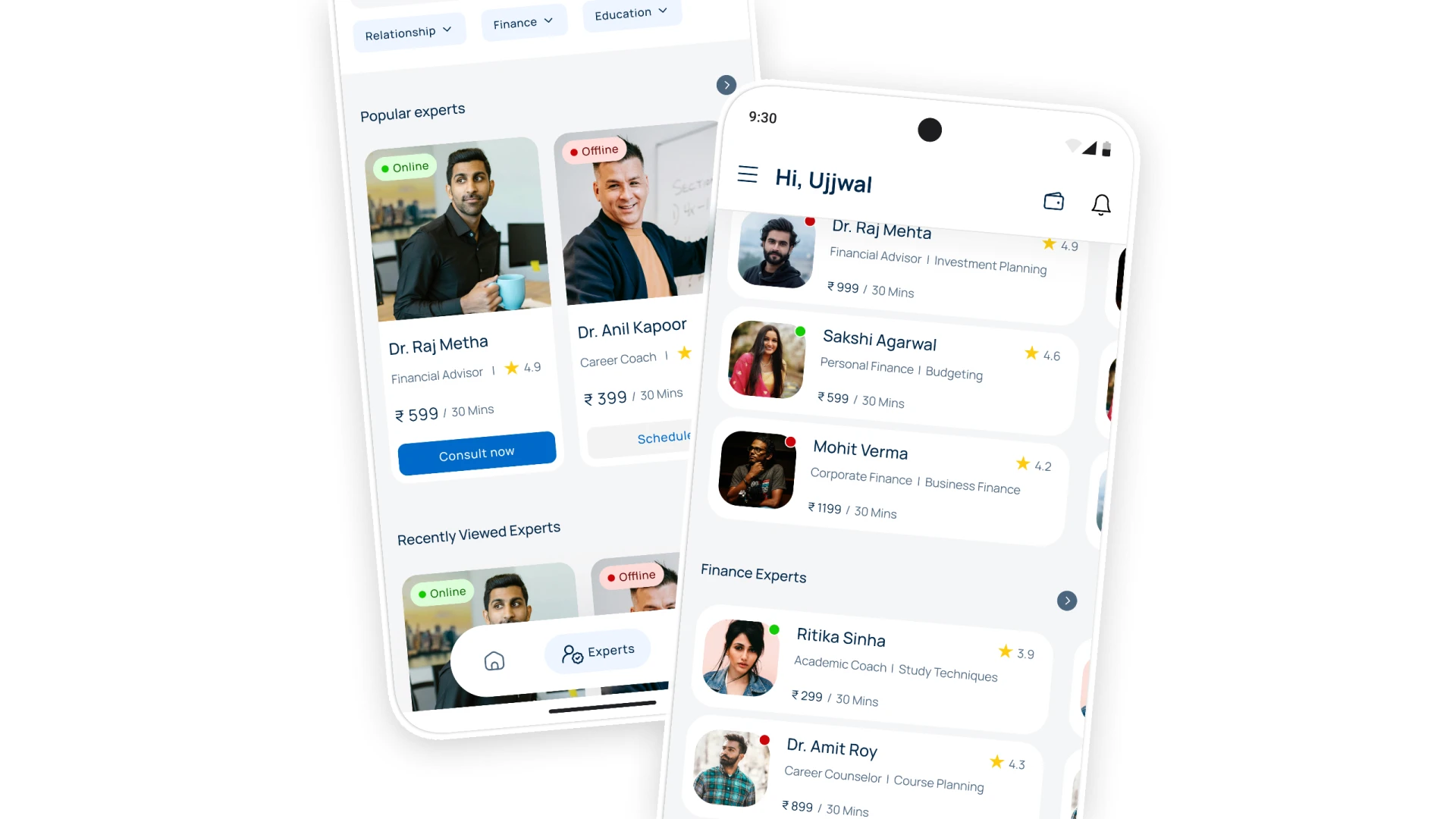
1. Trust at a Glance
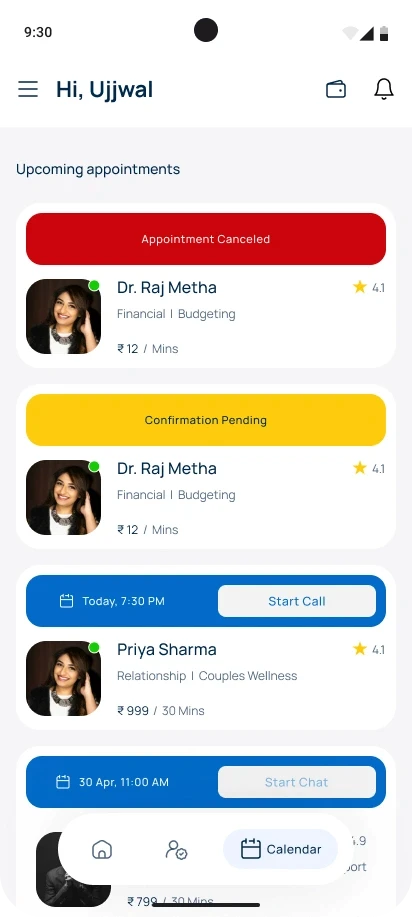
We redesigned expert cards to show:
Specialization tags
A short credibility line (“LLB • 12 yrs • Family Mediator”)
A real-time availability pill
A one-line user testimonial
This shifted trust from “credentials” to “proof that matches my situation.”
It also reduced cognitive load dramatically.
2. A One-Screen Booking Flow
After selecting an expert, users now saw only two options:
Start Now (Chat / Call) or Schedule.
No extra steps.
No branching decisions.
No confusing price breakdowns upfront.
This created momentum — something the previous design kept killing.
3. Transparent Session States
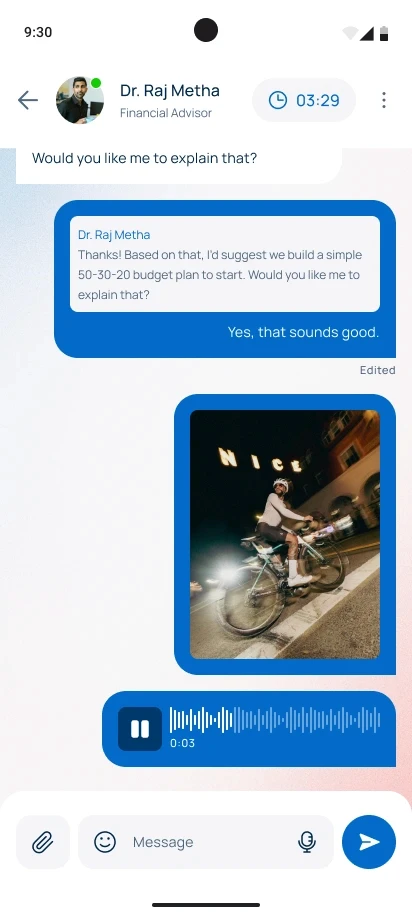
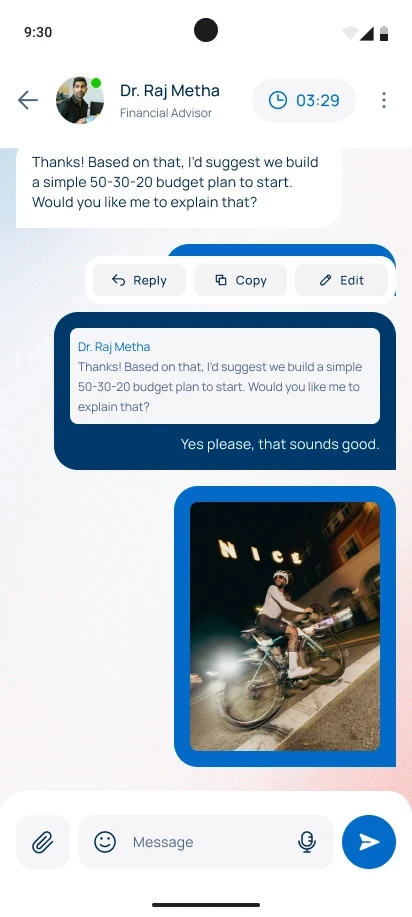
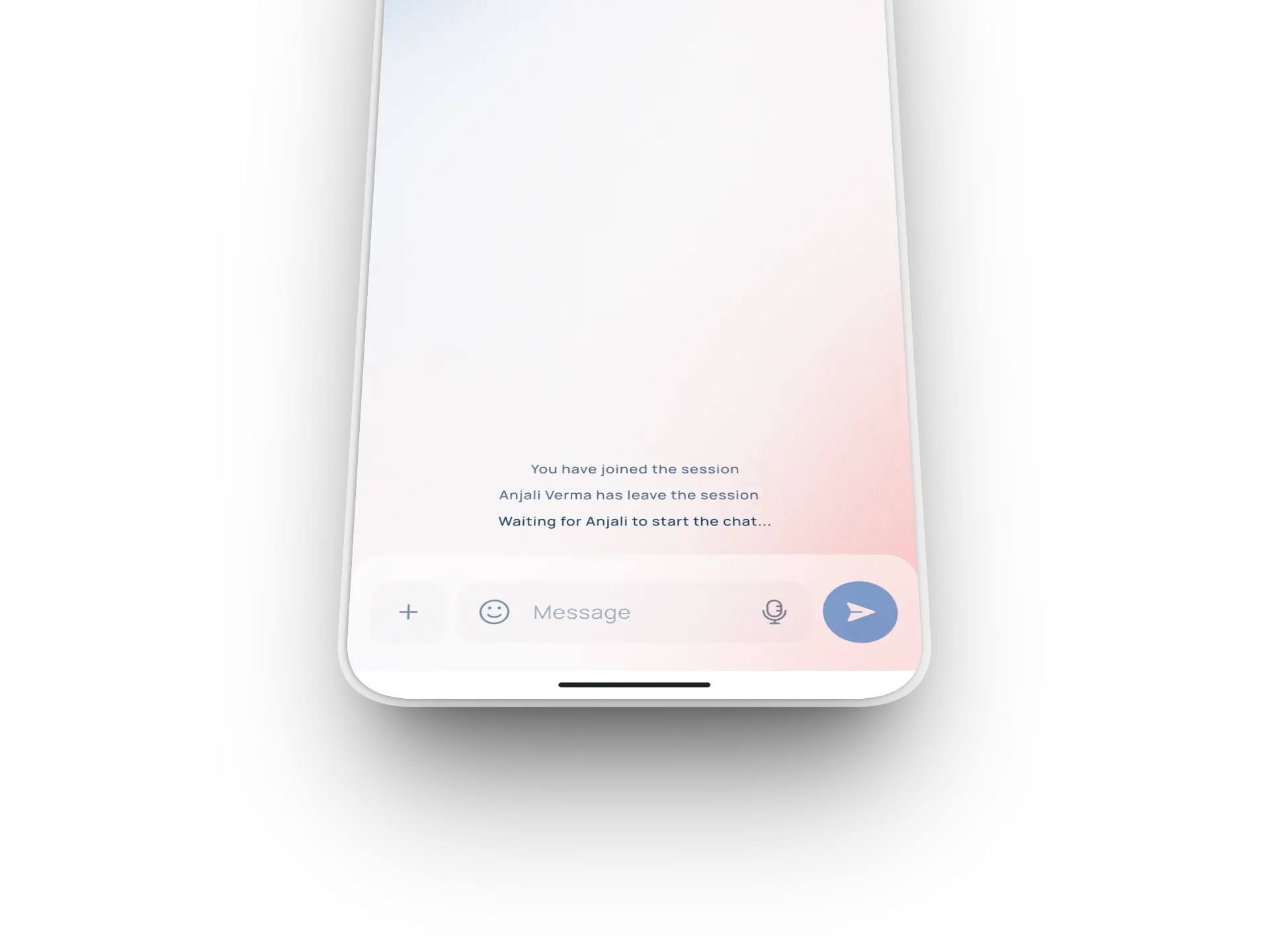
Instead of relying on generic availability labels, we designed real-time conversational status updates inside the chat screen.
Users now see clear, human-readable messages like:
“You have joined the session”
“[Expert] has left the session”
“Waiting for [Expert] to start the chat…”
This approach replaced abstract states like “Instant” or “Delayed” with contextual, moment-to-moment feedback.
It aligns with how users already understand messaging apps — making the experience feel familiar and reducing anxiety during wait times.
Why this worked:
Follows Jakob’s Law → users recognize chat behavior instantly
Provides Immediate Feedback → reduces uncertainty during delays
Lowers stress by explaining what’s happening, not just showing a status
Instead of promising speed, we showed progress, which built more trust than any label could.
The Growth
The new booking flow made stressed users feel “able to start.”
Layered trust signals outperformed raw credentials.
Transparent availability restored user belief in the platform.
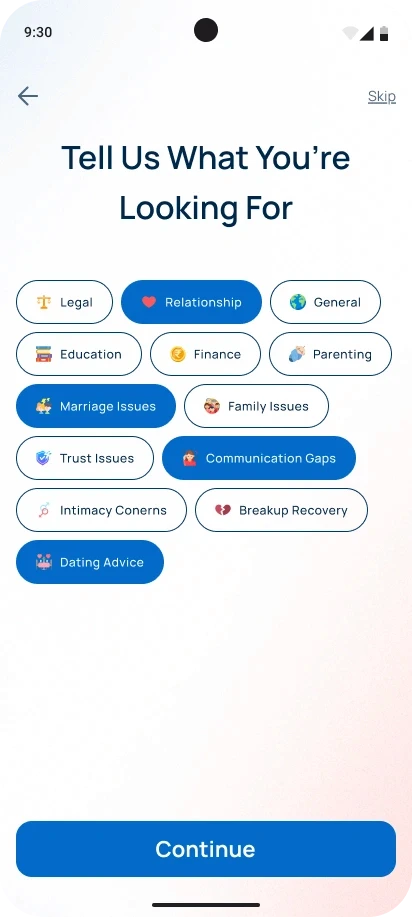
Emotional micro-narratives helped people name their problem faster.