
Methods Used:
Competitive Analysis, User Interviews & Feedback, Persona Creation, Wireframing & Prototyping, Usability Testing, A/B Design Exploration
Tools:
Figma, Notion, Google Form/Sheets
Introduction & Context
Orchid Love is an e-commerce platform dedicated to delivering fresh orchids and indoor plants across India. In a space where online plant buyers are cautious and emotionally driven, the goal was to craft a homepage that not only builds trust but connects emotionally especially with those looking to gift. I designed two tailored homepage experiences to reflect different user intents: one optimized for gifting and emotional buying, the other structured for everyday shoppers who prioritize browsing and variety.
The Challenge
Designing for an e-commerce platform like Orchid Love came with its own unique hurdles. Unlike conventional products, plants especially orchids are fragile, seasonal, and highly dependent on how they are delivered. Users often hesitate to place an order because of doubts about quality, delivery, and suitability.
Some key pain points included:
Doubts about freshness: “Will the orchids look as good in person as they do online?”
Delivery reliability: “What if the plant arrives wilted or damaged?”
Beginner hesitation: “Are these plants easy to care for? Will they die quickly?”
Lack of emotional connection: Competitor sites felt cold and transactional, missing out on gifting appeal.
Poor discovery experience: Users wanted to shop by categories, needs, or space types, but existing flows were cluttered or uninspiring.
It was clear we needed to build trust quickly, tell a story that resonates with both seasoned and new plant buyers, and create a guided, delightful user experience that celebrates the beauty and joy of gifting nature.
Research & Insights
I conducted heuristic evaluations of top competitors like The Sill, Ferns N Petals, and Bloomscape. While they offered decent navigation, few stood out in terms of emotional design or user guidance. I also interviewed 6 potential customers and mapped out their concerns, expectations, and goals.
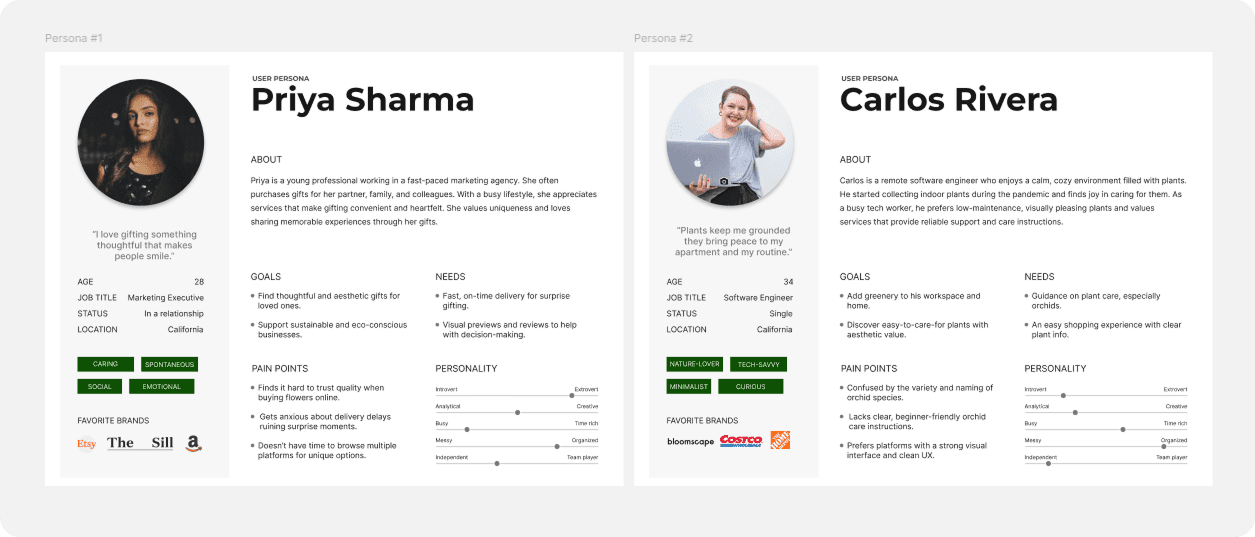
From these conversations, two primary user personas emerged:
The Gifter buying plants for occasions, values aesthetics, simplicity, and emotion.
The Enthusiast interested in variety, value, and care information; loves discovering new plant types.
Ideation & Planning
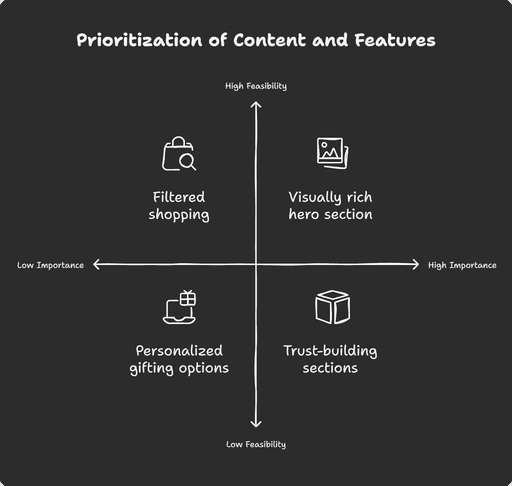
Using insights from my research, I prioritized key content and features using the MoSCoW method:
Must-Have:
Visually rich hero section with emotional copy
Trust-building sections (delivery assurance, freshness guarantee)
Product categories with CTA buttons
Testimonials and social proof
FAQ addressing typical fears
Should-Have:
Filtered shopping (indoor/outdoor/popular)
Visual indicators of product variety and pricing
Secondary CTAs for plant care resources
Could-Have:
Add-to-cart directly from homepage (for frequent users)
Personalized gifting options
Design Execution
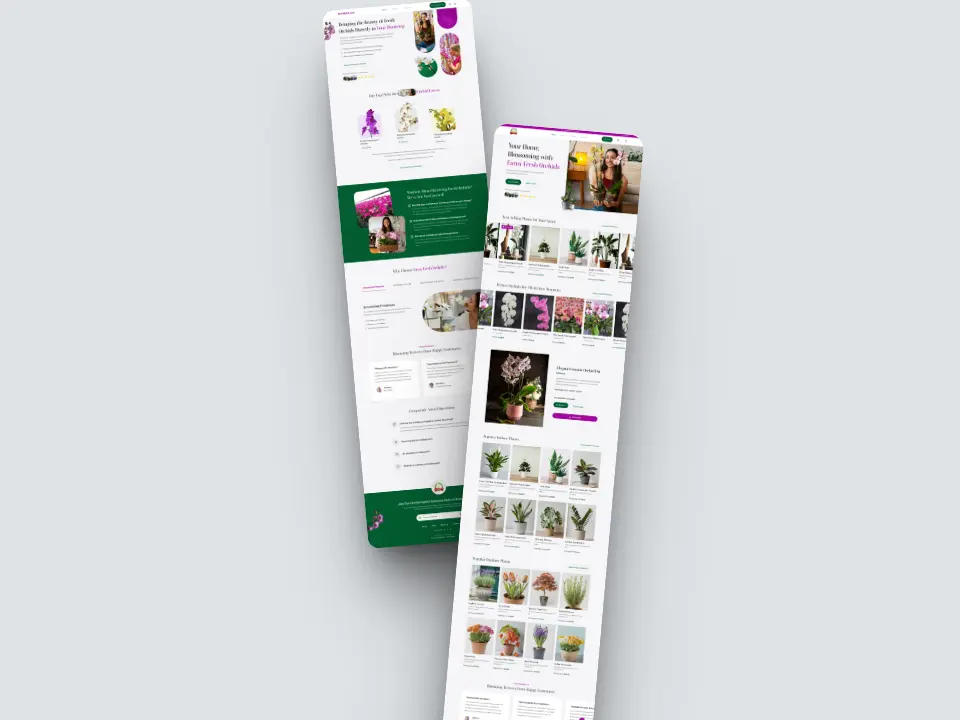
To match different user intents, I created two distinct homepage designs:
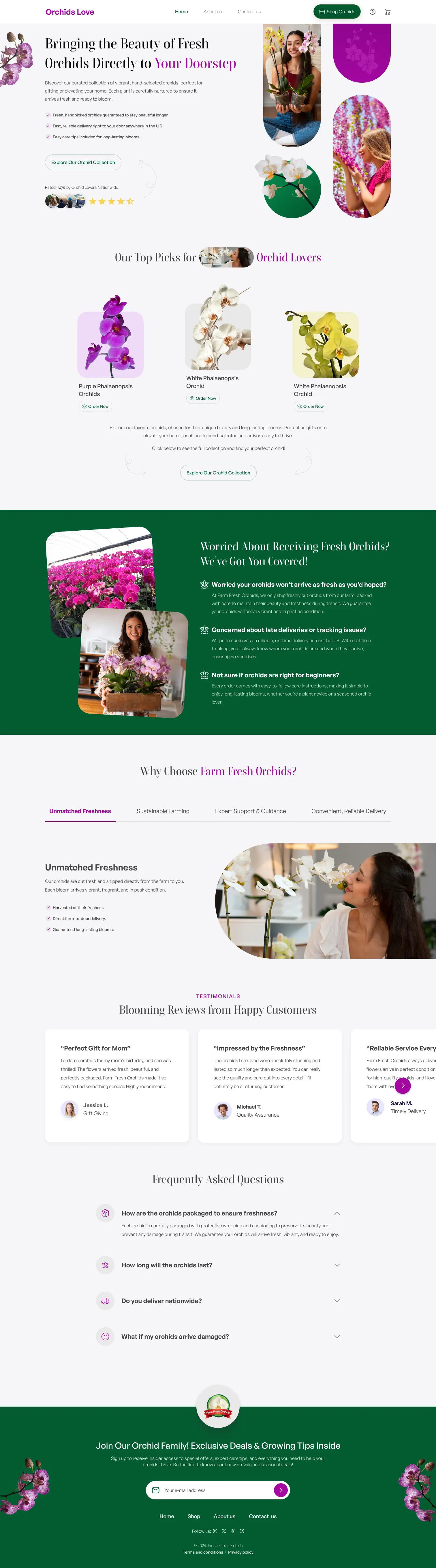
Homepage for Gifting (Emotional Buyers)
This design opens with a bold headline:
“Bringing the Beauty of Fresh Orchids Directly to Your Doorstep”
Followed by:
A rich visual collage of people receiving or gifting orchids
Emotional reassurance: “Worried about receiving fresh orchids? We've got you covered.”
Highlighted trust points: delivery guarantees, freshness, farm sourcing
Featured collections: Purple, White, and Mixed Orchids with clear “Order Now” CTAs
Testimonials from real customers and a section of blooming reviews
FAQ accordion to address doubts
Newsletter sign-up to nurture long-term engagement
Tone: Elegant, emotional, gift-worthy
Goal: Create delight + drive first-time conversions
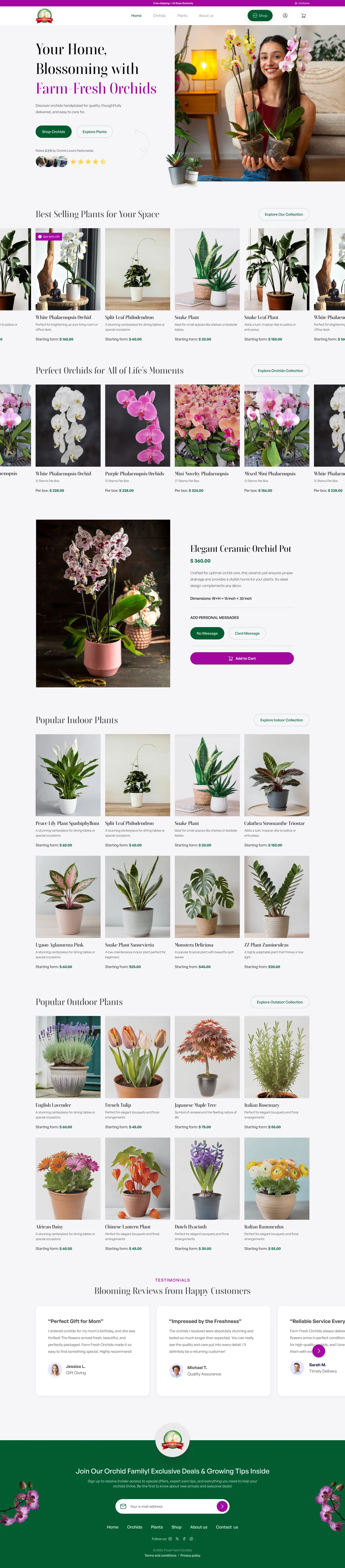
Homepage for Shoppers (Everyday Buyers)
This layout focuses on usability and exploration:
Straightforward headline: “Your Home, Blossoming with Farm-Fresh Orchids”
Quick access to “Shop Orchids” and “Explore Plants”
Grids showcasing best-selling plants with starting prices
Product cards that show variety, price, and rating
A unique section for gifting (e.g. "Elegant Ceramic Orchid Pot")
Categories like Popular Indoor & Outdoor Plants
Testimonials and social proof remain consistent
Tone: Product-first, clean, informative
Goal: Help users browse quickly and discover based on need or space
Feedback & Iteration
I shared these designs with 4 users representing both personas. Feedback confirmed the emotional homepage was compelling for gifters, while plant enthusiasts preferred the detailed product grid. The FAQ and testimonial sections were especially praised for building confidence. In the future, A/B testing these variants can help dynamically serve users based on entry point (e.g., Google search vs. email newsletter).
Product-Focused Homepage (For Everyday Shoppers)
+42% increase in product category exploration
Shoppers interacted more with product grids and clicked deeper into subcategories.+16% uplift in "Add to Cart" actions from homepage
Clear product pricing, images, and CTAs helped drive immediate shopping behavior.
Outcomes & Learnings
This case study taught me the power of micro-targeted homepage design. Not every user arrives with the same goal, so offering varied, intentional content paths led to better clarity and engagement.
Key takeaways:
Pairing emotion with information increases trust and action.
Strong visual hierarchy helps users quickly orient themselves.
Social proof and reassurance are non-negotiables in plant e-commerce.